
 The word “cryptozoology” brings to mind crazy television shows with re-enactments of creatures of legend coming to life on the screen and generally being described by somewhat less than credible eyewitnesses. However, whether or not there is any truth to the stories and eyewitness encounters with these creatures the bottom line is that these legends exist and must have come from somewhere. So whether you are a believer in these creatures of lore, or not, chances are that you found your way here looking for a little more information about these cryptozoological creatures. Cryptozoological creatures have been a source of contention between believers and nonbelievers for years in a struggle of each party attempting to prove the other wrong and while believers generally have a difficult time providing proof, nonbelievers often have a difficult time disproving these mythological creatures.
The Legendary Creatures of Cryptozoology
By definition Cryptozoology is the study of animals or creatures that are believed to exist through legend but have no concrete proof to confirm their existence outside of legend. The unique thing about cryptozoological creatures that many people are unaware of though, is that cryptozoology also encompasses the study of creatures that are believed to still exist despite being considered extinct as well as living creatures that are believed to be living drastically outside their usual geographic range. Many people mistakenly believe that cryptozoological creatures are only those creatures that are told of in legend and they do not understand that this particular field of study also encompasses creatures that did once, or still do, roam the Earth. So what are some of the creatures that are studied in cryptozoology? Included in cryptozoology creatures that are commonly studied are: the Abominable Snowman, Bigfoot, dragons, the Loch Ness monster, mermaids, Mothman, shape shifters, the giant vampire bat, vampires, and werewolves.
Table of Contents
Most Famous Cryptozoology Creatures
- The Abominable Snowman
- Bigfoot
- Dragons
- The Lock Ness Monster
- Mermaids
- Mothman
- Shape Shifters
- The Giant Vampire Bat
- Vampires
- Werewolves
Best of the Rest
- Agogwe
- Ahool
- Almas
- Alux
- Aswang
- Barmanou
- Batsquatch
- Beaman Monster
- Beast of Bladenboro
- The Beast of Bodmin Moore
- The Best of Bray Road
- Beast of Gevaudan
- Black Dogs
- Bunyip
- Burrunjor
- Cadborosaurus
- Champ
- Chullachaqui
- Chupacabra
- Dovarchu
- Dover Demon
- Ebu Gogo
- Elmendorf Beast
- Enfield Monster
- Fear Liath
- Flathead Lake Monster
- Flatwoods Monster
- Fouke Monster
- Honey Island Swamp Monster
- Issie
- Jersey Devil
- Kikiyaon
- Kongamato
- Kushtaka
- Lake Elsinore Serpent
- Lake Murray Monster
- Lake Norman Monster
- Lake Tianchi Monster
- Lake Worth Monster
- Lizard Man
- Lobizon
- Loveland Frog
- Lusca
- Mahamba
- Mamlambo
- Mngwa
- Mokele Mbembe
- Morgawr
- Murphysboro Mud Monster
- Nahuelito
- Nain Rouge
- Nimerigar
- Ninki Nanka
- Nyalmo
- Orang Bati
- Owlman of Mawnan
- Ozark Howler
- Phaya Naga
- Piasa
- Thunderbirds
The Abominable Snowman
The Abominable Snowman is often referred to as Yeti and the two terms are generally interchangeable; however, they should not be confused with Bigfoot due to their unique habitat in comparison to Bigfoot. Where Bigfoot is noted as living in warmer climates the Abominable Snowman or Yeti is believed to live in the Himalayan Mountains in Tibet and Nepal as well as some areas of Asia. For those who are well versed in the cryptozoology of the Abominable Snowman or Yeti they are able to identify specific species of the Abominable Snowman or Yeti based on specific features that set each of the species apart from each other. While generally cryptozoologists believe the Abominable Snowman or Yeti to be a hairy humanoid creature the legends that often propagate this creature claim a wide variety of genealogical roots. Some believe that the Yeti is a spiritual creature with supernatural powers and depending on the belief of the legend teller the Yeti is believed to either breed with humans or not. Others believe that the Yeti is a ghost type creature of a human long passed on and others believe that this creature is a demon whose job it is to guard the mountains where it is said to live. There are three varieties of Abominable Snowman or Yeti that are identified by cryptozoologists: the teh-lma – a small human like Yeti, the dzu-the – a bear like Yeti that is believed by some to actually be a bear rather than a Yeti, and the meh-the – the most recognized Yeti among the three that seems to resemble a humanoid figure with gorilla traits.
Bigfoot
Bigfoot is often confused with the Abominable Snowman or Yeti as mentioned above; however, the Bigfoot is more accurately used by cryptozoologists to describe the hairy humanoid creature that can be found in western America and western Canada. From a compilation of sightings, the Bigfoot is believed to have one set of characteristics that seems to be generally uniform among the species including a height between six to nine feet, extremely large feet, a large sloping forehead and a thick shaggy coat of hair that covers the majority of the body. Eyewitness sightings of the Bigfoot claim that the creature tends to live in family groups and are defensively aggressive towards humans. While many people still use the term Bigfoot, more serious cryptozoologists prefer to use the term Sasquatch as it appears more professional but in general the two terms are interchangeable. The most commonly known figure of Bigfoot is that as seen in the 1967 Patterson-Gimlin film of the Bigfoot supposedly walking across a wooded area.
Dragons
Dragons may be a creature of stories for many people there are also records of quite a few dragon sightings including a dragon that was reportedly killed in 1890 in Arizona by ranchers who spotted the 92 foot flying beast over their ranch. In more modern days; however, dragon sightings seem to have dwindled and interest by cryptozoologists seems to have been lost. Many people believe that it is not that cryptozoologists have a lack of interest in these mythological creatures but instead they tend to study these creatures under the guise of other “monsters” of lore such as dinosaurs that were thought to be extinct. According to folklore there are a variety of dragons including the European dragon, the North and South American dragons and the Asian dragons. Each of these types of dragon is characterized by its own physiological appearance with the European dragons generally resemble large reptiles with at least one non-reptilian feature and are believed to possess magical powers, the North and South American dragons generally are similar to the European dragon, the Asian dragons are much more snakelike in appearance and are usually portrayed as having birdlike feet. In more ancient times it is thought that the rate of dragon sightings was higher due to a combination of factors including much more superstition among farmers and townspeople as well as the more modern re-categorization of these mythical beasts.
The Loch Ness Monster
The Loch Ness Monster is perhaps one of the most well recognized and widely studied of all of the cryptozoological creatures. While it is the belief of many that there is just one Loch Ness Monster cryptozoologists believe that if the Loch Ness Monster does exist then it is likely that the multiple eye witness accounts of this creature are of various creatures within the species instead of all being of one single specimen. The Loch Ness Monster is believed to live in the Loch Ness in Scotland, a fresh water loch in the Scottish Highlands which is slightly unusual being that most creatures that were at one time similar to the Loch Ness Monster thrived in salt water. Many people believe that the Loch Ness Monster is a plesiosaur that somehow managed to survive the extinction of the dinosaurs millions of years ago and has since managed to thrive in the fresh water of Loch Ness. Others believe that the Loch Ness Monster is a sea serpent and still others believe that the beloved creature known as “Nessie” is a water dragon or “kelpie” (an aquatic horse with magical powers.) While many believe that they have seen the Loch Ness Monster themselves and even claim to have photographic evidence such photos have been easily debunked by skeptics. Despite many sightings and much of the photographic evidence being debunked the Loch Ness Monster has developed its own following.
Mermaids
 Mermen and Mermaids are most often noted in fairytales rather than folklore but tales of these mythical creatures span the globe and have been around since man began sailing the ocean. While many cryptozoologists claim not want anything to do with these fantastical creatures a wide number of individuals claim to have sighted merfolk. Interestingly it seems that eyewitness accounts of merfolk identify the human fish hybrid beings as being far more fishlike than they are portrayed as being in legend. Many skeptics try to dismiss the merfolk as a new variety of fish that simply has humanlike characteristics and others believe that these creatures are a hybrid animal that is midway between a transition from land to sea; however, there is no concrete evidence to support either belief. Legend even goes so far as to claim that merfolk are alien beings; however, these stories are slightly less believable and even unlikely to be repeated by cryptozoologists who would prefer to believe that these creatures were a new species that has yet to be discovered. Commonly cryptozoologists also believe that the merfolk are also related to sea serpents or sea monsters or even shape shifters.
Mothman
While the Mothman has reported sightings from all over, the majority of these sightings seem to focus on an abandoned ammunitions dump of World War II in Point Pleasant, West Virginia. This “TNT” area as it is referred to boasts the most reports of Mothman sightings. Mothman is believed to stand around five feet tall standing and he is described as having wings, large red eyes, a grey body that is humanoid in shape. According to eyewitness stories of encounters with the Mothman individuals report feeling an extreme sense of doom and dread when looking in to his huge red eyes, reports claim that he has even pushed one eyewitness to the verge of a nervous breakdown. According to eyewitnesses the Mothman enjoys chasing cars and has footprints that resemble those of a giant and rather heavy dog. Cryptozoologists believe that Mothman may be a form of giant bat or thunderbird or if he does exist as a moth man then it is believed that he is the only existing specimen of his species.
Shape Shifters
Shape shifters are cited as being creatures that are able to completely and drastically change their physical appearance frequently such as werewolves. Many believers of shape shifters feel that Chupacabra is a shape shifter and they also believe that these creatures are able to take on human form in order to disguise themselves among the human population. The unique thing about shape shifters is that biologists and scientists worldwide cannot deny the fact that creatures may eventually be capable of shape shifting behavior since it does not actually go against any of the laws of science that most scientists live by. Scientists do, however, feel that shape shifters are not yet among us on this planet due to the fact that if they did they would already have been observed. Believers in shape shifters explain that shape shifters could easily escape observation by relying on their talents and point to the color changing ability of the chameleon to illustrate a creatures existing ability to change. No current evidence has been presented to support the existence of shape shifters.
The Giant Vampire Bat
The giant vampire bat is a creature that once existed during the Pleistocene era and unlike the three species of vampire bat that live on today it possessed a wingspan of around seventeen inches rather than the much smaller wingspans of the common vampire bat, white-winged vampire bat and hairy-legged vampire bat. While today’s species of vampire bats need only small amounts of blood to survive this much larger vampire bat of the Pleistocene era would have required much more blood in order to sustain its larger body. The giant vampire bat is believed to be extinct; however, reports from eye witnesses in Venezuela and Brazil in South America claim that this large blood drinking creature is far from extinct. One eye witness account claimed to spot a giant vampire bat with a wingspan of three feet three inches! While a living specimen of the giant vampire bat has yet to be spotted or captured by scientists they are still fairly optimistic that this legendary creature may still be alive. Due to the nocturnal and shy nature of bats it is difficult to locate any of the existing species; however, skeptics claim that if the giant vampire bat is actually as large as eye witnesses’ claim then it should not be difficult to locate a living specimen.
Vampires
Vampires are perhaps the most celebrated of mythological creatures in the modern day with all of the media interpretations of these creatures of folklore. The trouble with common day interpretations of vampires is that they are far from the vampires of folklore that cryptozoologists tend to focus on. The vampires of folklore are believed to have been humans that died and upon death either arose from their graves as ghostly vampire creatures that fed off human blood or as creatures that dug themselves out of their graves in order to search for human blood. These vampires of folklore were forced to return to their coffins before sunlight. Unfortunately for vampires cryptozoologists are far more interested in animals that show vampiric qualities rather than the much more human like vampires that feed on human blood. In addition to interest in vampiric animals and creatures, cryptozoologists are interested in folklore that tells of trees and other mythical creatures that are rumored to feed on human blood.
Werewolves
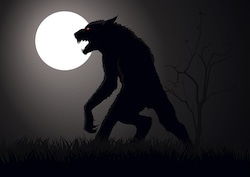 Werewolves are the most commonly known shape shifting creatures of folklore, known as humans that shape shift in to wolf form. Werewolves are believed to be more supernatural than cryptozoological due to the bizarre nature of shifting from one form to another. Werewolves are generally believed to walk on their hind legs resembling humans in form; however, they have a long wolf like coat of hair that covers their body and the head of a wolf. Skeptical cryptozoologists dismiss werewolf sightings as being an unknown species of wild dog that has learned to walk bipedally or a species of Bigfoot that resembles a wolf or dog in its physical characteristics. The idea of werewolves is hard for most people to comprehend simply because the idea of being able to physically shift from one form to another is both unlikely and nearly impossible from a biological point of view, at least when considering shifting from a human form to that of a wolf.
Agogwe
Agogwe is a cryptozoological creature that was sighted in East Africa between 1900 and the 1960’s. While there have been no recent sightings of this creature, legends of it still remain. The Agogwe is small and bipedal and while human like in appearance, it is also covered in reddish brown hair. The skin underneath the fur of this creature is said to also be reddish brown in color. Eyewitness accounts of Agogwe state that this creature is between 3.2 and 5.6 feet tall. It is also said that Agogwe has opposable toes on its large feet. Natives of the Ivory Coast call this same creature the Sehite and a similar creature in Sumatra is referred to as Orang Pendek. The first sighting of this creature was in 1000 by Captain William Hitchens. Some believe that Agogwe is an Australopithecine; others believe that this creature is simply a species of gibbon.
Ahool
Ahool has been sighted in the jungles of the island of Java with sightings beginning in the early 1920’s and continuing through to the present day. This flying creature is said to be the approximate size of a one year old child; however, it also has a wingspan of around 12 feet! A number of witnesses of this creature claim that it has a human like face, a monkey head and a bat body in addition to two backwards pointing feet. According to sightings, this creature is nocturnal by nature and squats on the forest floor. During the daytime, these creatures are said to hide in caves. It is believed that the Ahool feeds on fish that it catches while skimming the water as it flies over. The name of the Ahool comes from the sound that this creature is most often heard being emitted as the creature flies. It is possible according to some, that the Ahool is simply a new species that has been forced out of recently deforested areas of Java and instead of being a monster, it is simply an unknown creature. Others have said that this large creature is an undiscovered species of owl or giant bat and yet there are also those who beliebe that this could be a species of pterosaur.
Almas
Almas is also referred to as the living ape man and has been sighted in the Caucasus Mountains, Kazakhstan, Central Asia, Mongolia, Pamira and Siberia. The first reported sighting of this ape man was recorded in 1427 and it is still sighted today. Those who have sighted Almas say that it looks much like a caveman with red hair covering its body and dark skin on the face. The brow ridge of the skull protrudes more than that of a modern human and the forehead slants while the jaw protrudes. This creature walks bipedally and ranges in height from five feet to six and a half feet. A bad odor has been reported by those who have had encounters with Almas. Reports claim that this creature may be able to run as fast as 40 miles an hour. Many believe that the Almasty have a similar appearance to the Neanderthals that were found in West Asia 350,000 years ago.
Alux
The Alux has most commonly been sighted in Guatemala and in the Yucatan Peninsula. Sightings of this creature date back to the early Mayan cultures but date to as late as the present day. According to those who believe in Alux, it is an ancient spirit that most commonly takes the form of various small forest animals or a small person. Those who have seen the creature in the form of a small animal always note something strange about its appearance that cannot be explained away by “normal” circumstances. Most of those who have seen the Alux saw the creature in its natural habitat, deep in forestlands but some have also seen them roaming on their property. By tradition, most landowners in Guatemala and on the Yucatan Peninsula will build a small home for the Alux to live in, this is said to dissuade the creature from roaming and causing mischief on the persons land. Some believe that building these houses for the Alux to live in can also protect their crops since the creature will become a protector of the land. It is important to treat the Alux with respect and not to make it feel disrespected otherwise it can become harmful or mischievous. Many locals take offerings to the Alux in hopes that the creature will reciprocate their kindness.
Aswang
Aswang is native to rural provinces in the Philippines most frequently in the Panay Island. The Aswang was first seen in the early 1900’s and is still seen today. Those who have seen this beast describe it as being a shape shifter that can take any form. It is said that when the Aswang wanders at night it takes the form of a monster with a large proboscis that is used to suck unborn children from their mother’s wombs or older children from their homes. It is said that although these creatures are quite monstrous by night, they are shy and quiet during the day and appear in human form. It is said that this creature prowls the night skies looking for prey. The Aswang has the ability to imitate any sound due to its nature as a shape shifter. It has also been said that the Aswang takes corpses and living people to consume when it is unable to procure other food sources. People believe that when the creature feeds on someone, it replaces them with a likeness that has been crafted out of tree trunks which act like the original being until becoming sick and dying. Despite being a “creature of myth” the Aswang still puts fear in to locals who refuse to go out on the streets after sundown for fear that the Aswang will attack.
Barmanou
The barmanou has been sighted in the mountains of both Afghanistan and Pakistan with sightings as early as the 1800’s and continue to the current day. As with many of these localized cryptozoological creatures, the barmanou is said to resemble a human and ape hybrid. Those who have seen barmanou say that it is very tall and walks on two feet and always brings with it a terrible smell like that of sewage. According to local legends the barmanou is known to abduct women of the area where it lives with the intent of mating with them. Some researchers of the barmanou believe that this creature is a missing link between human and ape as it shows considerable intelligence.
Batsquatch
Batsquatch sightings have been made in the Pacific Northwest area of the United States, most particularly in the Mt. Saint Helens area of Skamania county in Washington. The earliest known sighting of this beast was in 1980 and sightings have continued since. According to those who have seen this creature, batsquatch is most similar to a giant winged bat with incredible glowing red eyes and purple skin. Those who have heard this creature say that it sounds most similar to someone emitting a loud deep yell. Some believe that this creature is the result of an unusual split in evolution that created this large carnivorous beast. Arguments have been made that this in addition to other factors makes Batsquatch most likely a flying primate. Other researchers however, believe that Batsquatch could be a relative of the fruit bat that is found in Northern America.
Beaman Monster
The beaman monster has been sighted in Kansas City with the first sighting of the creature being in the early 1900’s and sightings continuing today. Those who have sighted the beaman have described it as looking like a cross between the Bigfoot and a wolf. While many people claim to have seen the beaman no one has any photographic proof that the monster exists. According to local legend, the beaman is the offspring of an escaped 12 foot tall gorilla that got away when a circus train wrecked in 1904. Many locals have claimed sighting a creature that looks like a wolf or a coyote and claim this to be the beaman monster.
Beast of Bladenboro
Sightings of the Beast of Bladenboro stem from Bladenboro, North Carolina. The beast was sighted between 1953 and 1954 but has not been seen since. The beast was described as looking like a large cat that had a long tail and weighed in at between 80 and 150 pounds. The creature is said to have been more than four feet long and had a cry reminiscent of that of a baby. First spotted in December 1953, the cat killed a dog and dragged it in to the bushes. While most who sighted the beast said it was catlike in appearance there was no consensus over what type of big cat it actually was. Most frequently it was likened to a panther, bobcat, cougar, bear, wolf or mountain lion in appearance. Some sightings of the creature claimed it to be in the company of a smaller juvenile creature of the same species.
The Beast of Bodmin Moore
The beast of Bodmin Moore is sighted in Bodmin Moor, Cornwall in South West England. The first sighting of this beast was in 1971 and it is still sighted today. Those who have seen the beast describe it as looking like a large mountain lion or panther with big eyes. The body of the beast is said to measure between three and five feet long and its tail is said to measure another eighteen to twenty four inches. While no odor has been associated with the creature it has been noted as making growling noises like those of a mountain lion. Some have also noted that the creature makes deafening sounds like that of a screaming woman. The beast of Bodmin Moore is most frequently known to feed on wild animals.
The Beast of Bray Road
The beast of Bray Road is native to Wisconsin and was first sighted in 1936 and is still sighted today. The beast is believed to stand at 6 feet tall and looking like a large and muscular man with hair all over its body. Those who have seen the creature describe it as walking both on all fours and on two legs and it has been described as running also. The beast of Bray Road has also been sighted crouching by the road eating road kill. The face of the beast of Bray Road is described as looking like a wolf and it is said to have pointed ears as well as three large claws. The eyes of the beast are said to glow bright yellow and many people often believe that the creature is a werewolf. One individual who sighted the creature says that it let out a growling noise of “Gadara” before walking away from him. One of the most distinguishing characteristics of the beast that is commonly noted is the terrible smell of decay or rotten meat. Some believe from the beast’s mention of the word “Gadara” it is a demon from Biblical times, a creature of great strength.
Beast of Gevaudan
The Beast of Gevaudan is native to France and was only reported in sightings between 1764 and 1767. Covered in redish fur, this wolf-like creature has gaping jaws and is said to be the size of a calf. Some say that this creature has hooves on its rear feet and claws with six digits on each front paw. The beast is said to be very strong as well as very agile and eyewitnesses said that it crawls on its belly when hunting. Evidence of footprints from the beast indicates that this creature is capable of taking steps as long as 28 feet when moving at a rapid space. Those who have heard this beast say that it sounds much like a horse whinnying rather than a canid howling.
Black Dogs
The black dogs are also known as phantom dogs and hell hounds. These creatures have been spotted throughout Europe as well as throughout the United States. The earliest recorded sighting of these creatures was in the 1500’s and these creatures are still being recorded as being sighted today. Most eyewitness reports of this creature describe it as a very large black dog, in some accounts it is ghostly in appearance and in others it is as real as any other dog. Some describe these black dogs to be as large as a large calf or as big as an adult black bear with shaggy fur and long fangs and claws. While some dismiss these sightings as black bears or wild dogs, many who have seen these creatures emphasize a glow or shimmer that accompanies the creature. While the majority of sightings of the black dogs are not close enough to offer a description of the dog’s odor, some who have been close enough say that the dogs smell like sulfur or something equally as noxious. Most eye witness accounts claim that the dogs let out a haunting howl when they are spotted and that their large feet can be heard padding on concrete as they walk. Other witnesses claim that these glowing hounds have a demonic laugh and have even spoken to them. These hell hounds are most frequently sighted at night and are most commonly seen in graveyards but also have been sighted at bridges, boundaries, old footpaths and roads. Some believe that sighting the black dogs or coming in to contact with them has been an omen of something very bad that was to occur within the year.
Bunyip
The bunyip is a creature native to Australia. This creature was first sighted in the early 1800’s and is still sighted today. According to those who have seen the creature, the bunyip is similar to a hound in appearance with a horse-like tail and flipper like legs. The creature also reportedly has horns or tusks that look much like those of a walrus. Those who have spotted the creature often note that it seems to make strange indescribable sounds and troubling cries. Australian folklore tells of the bunyip as being a devil or a malevolent spirit but other tales tell of a rare creature that lives in the inland Australian waters. Aborigines tell of the bunyip living in various water bodies of Australia including billabongs, swamps, riverbeds and creeks. Depending upon which tale you hear, the bunyip has a variety of appearances including having scales, shaggy fur and a face like a crocodile.
In 1896 a skull from a peculiar looking animal’s skull was discovered on the banks of the Murrumbidgee River in New South Wales. The skill was put in to the Australian Museum in Sydney where many people visited to see the skull of what they thought to be the bunyip.
Burrunjor
The burrunjor is native to Australia and was first sighted in early Aboriginal days; however, it has not been reported as being sighted since 1982. According to the stories of those that have seen burrunjor, the creature resembles some type of dinosaur, having characteristics of a Tyrannosaurus Rex. Some claim that the burrunjor stood as tall as 25 feet. Those who have heard the burrunjor said that the beast let out roars that they would associate with dinosaurs. For a while in the 1950’s many farmers experienced cattle slayings where the cattle were found half eaten by an animal that could not be identified, local legend told of burrunjor and farmers were apt to believe that it was this creature that was killing their livestock. The last sighting of this creature in 1982 left researchers with evidence. The three toed footprints of the beast were found in New South Wales and measured two feet wide and two and a half feet long.
Cadborosaurus
The Cadborosaurus is native to the waters of Oregon, Alaska and Vancouver Island. This creature was first sighted in 1734 and is currently still sighted by visitors to the area. The body of the Cadborosaurus is long and serpent-like with a head that resembles that of a sheep or a horse. The grey-brown creature has been said to have two pairs of flippers, both anterior and posterior. The eyes of Cadborosaurus are believed to be incredibly large taking up as much as one third of the skull which may indicate a nocturnal lifestyle or living in deep murky water. Some say that Cadborosaurus measures in at around 49 feet long and is similar to the Loch Ness Monster in appearance. A significant portion of this creature’s length is the neck rather than the body.
Over one hundred sightings of Cadborosaurus have been noted to date since 1734 which seems to discount the possibility that this is a fictional creature.
Champ
Champ is the name affectionately given to the Lake Champlain Monster. The earliest sighting of this creature was in 1609 and it continues to be sighted in to the present. Descriptions of this creature describe it as looking like a creature that resembles a serpent and a plesiosaur. No sounds or odors have ever been associated with sightings of this lake dweller. Explorer, Samuel de Champlain, is said to have sighted Champ in July of 1609. At this time he described the creature as having a 20 foot long neck with a head that looked like that of a horse. At least three hundred sightings of Champ have been made and many of these people believe that Champ is a species of prehistoric marine reptile that managed to survive extinction, much like the Loch Ness Monster.
Chullachaqui
Chullachaqui is native to the jungles of Brazil and Peru and was first sighted in 1900. Sightings of Chullachaqui have been made recently. This small creature is described as looking like a small boy with the face of an old man, small eyes and mouth, a curved nose and just one foot. No odor or noise has been associated with this crypto-zoological creature. The Chullachaqui is believed to live in the Chullachaquicaspi tree that has some similar characteristics to the Chullachaqui spirit. According to legends that surround the Chullachaqui spirit, this creature kidnaps children in order to turn them in to Chullachaquis as well.
Some believe that Chullachaquis are simply mischievous and responsible for making travelers lose their way in the forest. It has been said that the Chullachaquis
Chupacabra
Chupacabra literally translates to mean “goat sucker” and has been noted as being cited in the United States, Mexico and Puerto Rico. The creature is most known for attacking livestock and drinking their blood – most commonly this livestock is comprised of goats. The physical appearance of Chupacabra varies depending on the eyewitness description. Many believe however, that this creature is approximately the size of a small bear and it has spines that begin at the neck and follow through to the base of the tail.
While there have been many claimed sightings of the Chupacabra, most reports within the United States and Mexico have been found to be canines affected by mange. For many though, the terror of the Chupacabra can’t be so easily explained particularly due to the drained blood from animals that have been attacked by this creature.
Doyarchu
The doyarchu is also referred to as the water dog and is commonly seen on the Achill Island on the west coast of Ireland as well as in Sraheens Lough Lake. The first sighting of this creature was in the 1700’s and it is still sighted today. The doyarchu is a water dweller and is said to have a body akin to that of a dog and an otter hybrid but is as large as a crocodile. The skin or fur of the creature is said to be closely held to the body like that of an otter and have almost a slimy appearance. Those who have seen doyarchu note that it has large hind legs much like other aquatic animals and very large paws as well as an otter like head. Doyarchu is also said to have a long neck and a long tail. Some researchers in the area believe that the doyarchu could actually be a juvenile Loch Ness monster or perhaps simply a seal of unknown species. The doyarchu are believed to travel in pairs and are said to be particularly aggressive towards humans as well as dogs. The doyarchu is said to be a monogamous creature that will seek out any man that kills its partner to attack him even if it means the creatures own death.
Dover Demon
The Dover demon was sighted in Dover, Massachusetts in 1977. According to those who have seen it, this creature stands between 3 to 4 feet tall and has a large watermelon shaped head with two bright orange and green glowing eyes. The creature also reportedly had no nose or mouth. No scent or sound has been associated with the Dover demon. Those who have seen the creature say that it appeared to move much like a child when it walked or climbed but when humans approach it, it runs away faster than any human could.
Some believe that the Dover demon is the same as the mannegishi described by the Cree Indians. These humanoid creatures were very thin with long arms and legs and no nose or mouth as described by those who have seen the Dover demon. According to the legend of the Cree, the mannegishi communicate through telepathy and breathe directly through their skin.
Ebu Gogo
Ebu Gogo has most commonly been sighted in Flores, Indonesia. The creature was first sighted in ancient times and was last seen in the late 19th century. Those who have seen depictions of Ebu Gogo describe it as looking much like a little gremlin. According to noted sightings the Ebu Gogo is a small creature that has a hair covered body. This small creature has disproportionately long arms and a large belly as well as quite large ears. The Ebu Gogo walks bipedally and appears to have an uncomfortable pace. No sighting of this creature has ever noted it as talking to anyone; however, they have been noted as repeating words that were spoken to them or muttering indistinguishably. Fast climbers and strong creatures, the Ebu Gogo are capable and willing to eat anything and everything according to legend, including people. Some believe that the Ebu Gogo is related to the Homo Florensiensis discovered in a cave in Flores. According to local legends however, the Ebu Gogo is a formidable creature and is used to scare children much like the boogie man is used to scare children in the United States. At one point the island of Flores was believed to have belonged to a small race of people not unlike the Ebu Gogo. Legend also tells that at one time humans and the Ebu Gogo lived in close proximity of each other until the Ebu Gogo began to destroy the human’s cattle. Once the humans noted this destruction they drove the Ebu Gogo away by hunting them which angered the Ebu Gogo and caused them to become vengeful. At one point it is said that these creatures even stole a baby from a local village! No very recent sightings of this creature have been noted.
Elmendorf Beast
The Elmendorf beast has been sighted in Elmendorf, Texas and has only been sighted in 2004. According to the 2004 sightings of the beast it was similar to a coyote in size and had bluish skin but no hair. Locals believed that the creature was responsible for feeding on chickens of local farms and for a while many believed that it was the Chupacabra. One witness to the Elmendorf beast described it as weighing around 20 pounds and looking like a malnourished dog, he shot the creature and found that it had scaled skin and an overbite. Upon research of the skull of the animal at the San Antonio Zoo it was concluded that the animal was likely a canid of sorts and had suffered from sarcoptic mange which caused it to lose all of its natural hair. Researchers at the zoo found that while it was definitely a canine of sorts, they were unable to find out more from the beast’s DNA profile since its body had weathered the elements for far too long. One researcher believed that the creature was perhaps a coyote and dog hybrid.
Enfield Monster
The Enfield Monster was sighted in Enfield, Illinois in 1973 but it has not been seen since. At the time of its sighting the eyewitness said the monster appeared to be between four and five feet tall and had a grey body. Unusually the monster is said to have had three legs and two short arms that came out of its chest rather than the sides of its body. The eyes of the beast were described as being red. The eyewitness of the Enfield Monster said that it made a noise as if it were a cat. With the sighting of this beast being at night and being described in such an unusual manner, many believe that the eyewitness was either confused or caught up in the hype of a considerable number of UFO type sightings that were taking place in the area at the time. Others are inclined to believe that the creature was actually a new type of animal that had not been discovered previously because of the incredibly dense woodlands.
Fear Liath
Fear Liath is native to the Ben MacDhui Mountain in Scotland and was first sighted in 1800 and is still sighted today! People who have sighted Fear Liath describe it as looking like a giant Bigfoot, standing between 15 and 20 feet tall. All over the Fear Liath is a coat of short brown fur or hair and its head is described as being overly large when compared to the rest of the creature. Perhaps one of the scariest features of this creature is its very long fingers and toes that have sharp talons tipping them. Fear Liath is also noted to have pointed ears. While no smells have been connected with sightings of Fear Liath, some witnesses have noted sounds of echoing footsteps and crunching of branches that seem to follow them. Noted as the highest mountain peak in the Cairngorms Mountains, Ben MacDhui is often tackled by mountain climbing enthusiasts but it seems as though the Fear Liath is not too keen on sharing its territory as it seems to scare away every mountain climber in the area. Some who have encountered the beast in their climbs even state that the creature has the ability to manipulate the mind, leaving them with terrible feelings of desperation, dread and depression. Some footprints that are claimed to be of the Fear Liath have been found on the Ben MacDhui Mountain.
Flathead Lake Monster
The Flathead Lake Monster was spotted at Flathead Lake in Montana and has been spotted there since its first sighting in 1989. According to eye witness reports, the monster is about twenty feet long and has a body that is whale like in appearance. The head of this monster is said to have the appearance of a bowling ball. Most reported sightings of this creature describe it as a whale or a large fish. At one point a monster sized Sturgeon was pulled from the lake and many thought that perhaps that would be the end of the Monster sightings; however they continued. One sighting of the monster in 1993 however, did liken the head of the creature to that of a sturgeon but that same sighting gave it the body of an eel. While the Flathead Lake Monster is frequently compared to the Loch Ness Monster, it is actually a completely different type of monster based upon physical descriptions by eyewitnesses.
Flatwoods Monster
The Flatwood Monster was sighted in Flatwoods, West Virginia but was only sighted once on September 12, 1952. Although it was only sighted one a single day it was sighted by a number of people who all described it as being almost ten feet tall. Multiple reports said that the creature looked like an alien with a rounded face and very large round eyes. The facial skin color of the monster was described as being red where the body was lacking color. The body of the creature was described as looking like the monster was wearing a dress. The Flatwoods Monster carried with it the smell of burning metal and made a hissing noise. Many believe that the creature had actually been an alien due to the fact that a number of UFO reports had been made earlier the same day.
Fouke Monster
The Fouke monster is native to Fouke, Arkansas in the United States and was first sighted in the early 1970’s. The Fouke monster is still sighted today! According to those who have seen the creature it stands between 7 and 8 feet tall and weighs between 250 to 300 pounds. The appearance of the Fouke monster is often described to be much like that of a gorilla as it has a wide chest and walks in a slouched position with its arms dangling down and its shoulders slouched over. When it runs, the Fouke monster is said to gallop. The body of this creature is covered in hair and it has two eyes that are said to shine red. Those that have encountered the beast say that the creature has a terrible odor comparable to that of a skunk. The Fouke monster is also said to have a blood curdling roar which sounds like something between a cow bellowing and a panther screaming. Some believe that this creature is a cross between a man and a great ape. It is believed that this creature commonly feeds on animals and local farmers have found their animals strewn close to their pen and many had been ripped open and their pen had been destroyed. A number of encounters with the Fouke monster have been noted including one in which a young man was taken from the porch of his home and slammed in to the ground. The young man later went to a local hospital with scratches along his back as evidence of the encounter. Whether or not this encounter was genuine, many locals have found evidence of the beast in large three toed footprints that have been sighted numerous times.
Honey Island Swamp Monster
The Honey Island Swamp Monster is native to the Honey Island Swamp in Louisiana in the United States. First spotted in 1963, the Honey Island Swamp Monster continues to be sighted today. Eyewitnesses of this creature have seen it walking both bipedally and quadrupedally and it is described as having wooly fur much like that of a mammoth. The creature is said to stand at nearly seven feet tall when it stands on two feet and weigh around 400 to 500 pounds. Most characteristic of this large creature are its piercing yellow eyes. People who have seen the monster in person frequently describe it as having a smell of decay and death about it.
Issie
Issie is native to Lake Ikeda on Kyushu Island in Japan and was first sighted in 1900 and is still sighted today. Those who have seen Issie compare it to the Loch Ness monster in appearance. Local legend tells of a white mare that lived with its foal by the lake and when its foal was kidnapped by a samurai the mare jumped in to the lake and transformed in to Issie. Locals say that when Issie surfaces in the lake she is searching for her lost foal in despair. According to eyewitnesses, Issie resembles a Sauropod or a sea serpent and measures in at around 30 feet long! Video and photographic evidence of Issie’s humps and ridges have been caught but real concrete evidence is lacking. Some believe that Issie is actually a species of large Malaysian eel however, they would measure just one sixth of the reported length of Issie!
Jersey Devil
The Jersey Devil is believed to live in the Pine Barrens of Southern New Jersey. There are many various accounts of just what this creature looks like but most commonly it is described as being bipedal, able to fly and as having hooves. So strange is the combination of features that are described on the Jersey Devil that there really is no explaining it away. According to a culmination of eyewitness reports, the Jersey Devil has a forked tail, bat like wings, clawed hands, bat like wings and a head like a dog.
The story of the Jersey Devil states that the devil was born as the thirteenth child to Mother Leeds who claimed after her twelfth child that the thirteenth would be the devil. The thirteenth child, although born with “normal” features began to morph in to a creature that represented the Jersey Devil. Legend tells that the devil was exorcised for one hundred years but after that it would return.
Kikiyaon
Kikiyaon is also known as the “soul cannibal” and is native to the African plains and jungles. First seen in the early 1900’s, Kikiyaon is still seen today and is most commonly described as having an owl like appearance. With a large owl like head, Kikiyaon is said to have massive talons and huge sharp teeth as well as spurs that tip its large wings. The hair of Kikiyaon is said to be grey green in color and it is said to smell like a rotting snake carcass. Kikiyaon makes a screeching sound as well as a deep grunting noise. This mysterious creature is believed to stalk its victims in the darkness of night, emitting a terrifying screech before it grabs its prey with its sharp talons. A physical attack from Kikiyaon is not the only thing to fear from this mythical beast however, many believe that this monster can attack people through their dreams.
Kongamato
Kongamato is native to Angola, the Congo and Zambia and was first sighted in 1923 and is still sighted today. This strange looking creature most commonly represents the appearance of a Pterosaur from prehistoric times but is red in color. The incredible size of this beast is just one of the most intimidating factors that Kongamato brings with it, an amazing 4 to 6 foot wingspan and a 4 ½ foot long body is more than enough to terrify any man. Researchers looking for the Kongamato have gone in to the jungles looking for this creature and spoken with locals about sightings. While locals were not able to identify any other prehistoric creature from its picture, they would always point to the Pterosaur and refer to it as Kongamato. No sounds or smells have been associated with the Kongamato.
Kushtaka
The Kushtaka is native to Southeastern Alaska and was first sighted in the early 1700’s and has been sighted fairly recently. According to legend, the Kushtaka takes on the appearance of a human being as well as the shape of various animals most particularly the otter. While no odors have been reported with sightings of the Kushtaka, the creature has been said to be able to make any noise that a human being can make and they can also imitate any other sound they hear. The word “Kushtaka” comes from the Tlingit Indians of Southeastern Alaska who believe the creature to be a “land otter man.”
The Kushtaka are believed to be shape shifters and depending upon which legend is told, the creatures can be cruel or friendly. Some believe that the Kushtaka trick sailors to their deaths by imitating loved ones in trouble. Other people believe that the Kushtaka use their mystical powers to help others. In cases where the creature is malevolent however, it truly is evil, using the crying of a child to lure humans to their death in freezing rivers where they are killed and torn to shreds. Occasionally, the Kushtaka will turn the victim in to another Kushtaka.
Miners, who were in Alaska looking for gold, were often claimed as having seen the creature and comparing it to a longhaired creature that was covered in sores. Many people who saw the beast were also reported to have gone mad after their sighting.
Lake Elsinore Serpent
The Lake Elsinore serpent is often referred to as Elsie. Elsie is native to Lake Elsinore of California. The creature was first seen in 1884 and is still reported in sightings today. Ever since the first sighting of Elsie in 1884, those who continue to sight it claim it to look like a hybrid between a plesiosaur, a serpent and a creature from the dinosaurs. There are no smells or sounds recorded by eyewitnesses that are associated with Elsie. According to a 1970 report by eyewitness Bonnie Play, Elsie is around 12 feet long and 3 feet wide. Play also states that the creature swims in an up and down motion. Unfortunately very few credible sightings of this creature have been made with the exception of three state park officials who saw Elsie alongside their boat not long after Play’s sighting.
Some believe that the Lake Elsinore Serpent is a spiritual creature because in 1954 Lake Elsinore went completely dry and no creature was found.
Lake Murray Monster
The Lake Murray Monster is native to Lake Murray in South Carolina and was first sighted in 1933. Still sighted today, the Lake Murray Monster is described as looking like a large snake with fins and measuring in at between 40 and 60 feet long. No one who has sighted the creature has ever described it as being accompanied by a scent or a sound. Many researchers have attempted to catch and study the Lake Murray Monster; however, rather than catching the monster in a net they would repeatedly find huge holes in the net. A lot of controversy has surrounded the Lake Murray Monster particularly since a number of UFO sightings have been made over the lake. While many officials have tried to pooh-pooh the idea of the Lake Murray Monster, retired Army General Marvin Corder has been noted as saying that the lake was home to something “far more sinister than a big fish.” One couple is noted as encountering the creature in the lake while fishing when it pursued them and tried to sink their boat.
Lake Norman Monster
The Lake Norman Monster is native to Lake Norman in North Carolina and was first sighted in 1982 and is still sighted today. Many who have encountered the Lake Norman Monster state that it resembles a large pile of mud with a head that comes out of the mud and resembles that of a Sauropod dinosaur. The head of this creature is quite large and its neck measures around 10 feet long. The Lake Norman Monster is said to have a particularly foul smelling odor and to make its home somewhere in the depths of the 110 foot deep lake. Many residents that live near to the lake have sighted the monster and while each description of the creature differs slightly they all compare the monster to a prehistoric creature of sorts.
Lake Tianchi Monster
The Lake Tianchi Monster is native to Lake Tianchi found at the peak of Baekdu Mountain in China. The first sighting of this creature was in 1903 and it is still sighted today. Those who have seen the Lake Tianchi Monster compare it to a giant buffalo that lives in the water and has large fins. No sounds or smells have been associated with the Lake Tianchi Monster. The monster is said to attack those who come close to the large mountain lake but in one account when the monster was shot at it retreated back in to the water. The Lake Tianchi Monster is said to swim very quickly and smoothly in the water and according to one sighting it is an animal that travels in pairs with as many as six creatures being sighted at one time. Over the past twenty years it is said that more than thirty reports of the monster have been made.
Lake Worth Monster
The Lake Worth Monster is sighted at Lake Worth, Texas and was first sighted in 1969 and sightings continue today. Those who have seen the creature describe it as lake creature that has both hair and scales. The Lake Worth Monster is described as standing at around six feet tall and having characteristics of a goat and a man as well as having scales. The creature is said to howl and have a very pungent odor that no one can quite describe but all say that it is a very disgusting smell. Those who have been attacked by the creature describe it as being very aggressive and one encounter notes eighteen inch claw marks on a couple’s car door. The Lake Worth Monster is said to be very strong and is said to let out a howl when it feels threatened.
Lizard Man
The lizard man is native to South Carolina in the United States and was first sighted in 1988 and is still sighted today. According to eyewitnesses, the lizard man walks bipedally and stands between 7 and 8 feet tall. The skin of this creature is said to be green and scaly and have glowing red eyes. Those who have seen this creature say that it resembles a hybrid of a snake and a human and has a ridge that begins at the top of the head and goes down to the snout. The lizard man is said to have long black claws on the end of each of its three fingers of each hand. People in the area claim to find three toed footprints all around the sighting areas of the creature. The majority of sightings of the lizard man were made in the summer of 1988; however, some eye witnesses report seeing the creature more recently. The origin of the lizard man is unknown however Native American tribe’s native to the Carolina’s used to tell of lizard men who lived in the area which they referred to as Inzignanin.
Lobizon
Lobizon is native to Argentina and was first sighted in the early 1900’s and is still sighted today. This creature is said to let out deep growls and howling noises as it approaches and is said to resemble a “Werewolf” that walks on two legs. The body of Lobizon is said to be particularly muscular and hairy and its teeth are very sharp. Unlike many mystical creatures that are only seen briefly or in a couple of encounters, Lobizon is spotted all over the country throughout various areas of the country. According to local beliefs, the Lobizon can only be created from the seventh son of a family. So strong is this belief that the government requires all families to get their seventh son baptized in order to avoid the potential for the creation of a Lobizon! While local’s fear this creature, this fear is not as great as that for other creatures since Lobizon currently mostly targets animal victims and rarely targets human prey.
Loveland Frog
The Loveland Frog is native to Loveland, Ohio and was first sighted in 1955 and is still sighted to date. Standing approximately four feet tall this frog has green skin and has webbed feet and hands and walks on two feet. The Loveland frog, simply put, looks like a giant bipedal frog. A number of sightings of this creature have been made, including two by police officers. No scent or sound has been associated with any Loveland Frog sightings.
Lusca
Lusca has mostly been sighted in the Caribbean however other sightings of the beast have been made in other large bodies of water. The first sighting of Lusca was in 1896 and the creature is still sighted today. According to those who have seen it, Luska resembles a giant octopus that varies in length from 75 to 200 feet. Most sightings put this giant octopus at around 75 feet long. Those who have seen Lusca also say that it is capable of changing color like the average octopus. The Lusca lives under the sea and in sea caves where it feeds on crustaceans. The first reported sighting of this sea creature goes back to 1896 when two local boys found Lusca washed up on the shore at Crescent Beach in Augustin, Florida. Researchers could not identify the creature as any known biological entity. There are those who believe however, that the carcass of the creature was nothing but a colossal squid or a segment of sperm whale.
Mahamba
The Mahamba is believed to live in the People’s Republic of the Congo around Lake Likouala. The swampy region is purported to be the home of a giant fifty foot crocodile that is known locally as the Mahamba. This giant crocodile is said to be a freshwater descendent of mosasaurs that long ago went extinct. Aboriginis in the area tell of the giant lake reptile that is known to devour entire canoes and rafts. Little is known about the Mahamba outside of the People’s Republic of the Congo but some believe that this giant creature is actually a previously undiscovered species of central African crocodile.
Mamlambo
Mamlambo is said to live in the depths of African rivers. This cryptozoological creature is said to have first been seen several hundred years ago and to still be seen today. The body of Mamlambo is said to be up to 60 feet long and look like a hybrid of a snake and a fish with a horse-like head. Those who have seen this creature say that it measures around 67 feet long and is a solitary creature. No sounds or smells have ever been associated with this mysterious creature. The first time that this creature was observed it was in the Mzintlava river in Southern Africa and since this first sighting it has been feared by various cultures in the area ever since. According to those who have witnessed the creature, the Mamlambo thrives in wetter weather and has been said to drag both animals and people underneath the water to drown them before eating them. According to local legend, the Mamlambo has taken the lives of nine victims to date, the last of which was a young girl whose body was found buried in the dirt beside the river. Perhaps the most gruesome thing about this creature is that it is said to eat the faces of its victims before eating their brains.
Some explain the Mamlambo away as being an Elasmosaur or a type of Archaeocete; however, to those cultures that have seen it, the creature is simply a gruesome monster to be feared.
Mngwa
Mngwa is native to Tanzania and was first sighted in the early 1900’s and is still sighted to date. Those who have seen the creature describe it as looking like a grey cat with tabby like markings, which stands as large as a donkey! Those who have heard the creature liken its sound to that of a lion and a leopard. Some African natives refer to the Mngwa as the Nunda, but regardless of how they call it this beast is one of the most feared creatures of legend. Some researchers believe that the Mngwa is simply a discolored variety of a known species; however, existing footprints of the beast do not match to any currently known species.
Mokele Mbembe
Mokele Mbembe is a creature of Congo folklore. The name translates to mean “one who stops the flow of rivers” in Lingala language. A number of explorers have traveled out to Africa in search of this crypto zoological creature however; none have yet to discover the beast. Legend tells of a large creature that looks much like the large Sauropod dinosaurs that are now extinct. Mokele Mbembe is said to be herbivorous and is believed to live in and around Lake Tele. Other sightings of this great beast have described it as being similar to an elephant or a rhinoceros; however, the majority of sightings liken it to a Sauropod.
The earliest noted reference to Mokele Mbembe was in 1776 in a book by Abbe Lievain Bonaventure. Bonaventure was a French missionary who noted in his book to have found a giant footprint in the Congo River region. The problem was though, that no creature was actually spotted.
Many argue that the giant creature known as Mokele Mbembe could not exist without physical proof of it being in the area. Further support for this argument claims a lack of vegetation to support life as large as Mokele Mbembe; if such a huge creature did exist it would have decimated surrounding areas of vegetation by now. Biologist and Cryptozoologist, Roy Mackal however argues that there is plenty of unexplored land in this area that is capable of sustaining large creatures such as elephants.
Morgawr
Morgawr is native to Cornwall in the United Kingdom and was first sighted in 1906 and is still sighted today. The Morgawr is an unusual looking beast that is said to measure approximately 40 feet long and have bristles down the length of its back. The head of this creature looks like a beak and it has a hunched back appearing similar to a Therizinosaurus without the large pot belly and knife like digits. This creature is also noted as having “stumpy horns” on its head. Some believe the Morgawr to be a species of the plesiosaur since this creature is seen most often in Falmouth Bay. Others believe that Morgawr is actually a species of seal. To date no clear images of the Morgawr exist, only a few blurry images have been taken leading researchers to believe that this creature is yet another myth. Those who have seen this humongous beast however, will beg to differ.
Murphysboro Mud Monster
The Murphysboro mud monster is native to Murphysboro, Illinois and was sighted in 1973 but has not been sighted since. The monster is described as looking very much like the Hollywood creation ‘Swamp Thing” and stands around six feet tall. The creature is said to walk on two feet but to be hunched over and covered in a matted brown fur that has leaves and plants trapped in it. Some who have sighted the monster also claim that it has glowing red eyes. Approximations put the Murphysboro mud monster at around 200 lbs. Those who have seen the creature associate it with a terrible smell and shrieks and growls. The creature was sighted multiple times by different parties and each time it was close to a muddy river.
Nahuelito
The Nahuelito is native to the Nahuel Huapi Lake in Patagonia, Argentina and was first sighted in the early 1900’s and is still sighted today. Like many water dwelling “monsters” the Nahuelito is described as having a swan like neck in addition to humps along its body and fins that it uses to propel itself through the water. Those who have seen the creature have estimated it to be anywhere from 25 to 45 feet long! No sounds or smells have ever been associated with the creature. Unlike some areas where such crypto zoological creatures are feared, the Nahuelito is treated with respect by the Argentineans who believe that the creature should not be disturbed. Despite this respect however, a number of expeditions have been launched in the past against the Argentinean government, to seek out the Nahuelito.
Nain Rouge
The Nain Rouge is native to Detroit, Michigan but has also been sighted in a number of other locations throughout the United States. This creature was first sighted in 1701 and is still sighted today. Many who have seen the creature in modern day times liken it to a furry Golem (the character from Lord of the Rings). The Nain Rouge is child sized but has black and red fur as well as startling red eyes and protruding and rotten teeth. Those who have heard the Nain Rouge describe its cries as those of a cawing crow and like crows sometimes are, the Nain Rouge is associated with being a harbinger of doom. For whenever the creature is spotted, something awful is said to happen. Nain Rouge sightings have been associated with the Detroit surrender in the war of 1812, the great 1805 fire and the battle of the Bloody Run. Due to the association of the Nain Rouge with tragic or negative events, those who see the creature are generally terrified and left wondering what is going to happen next.
Nimerigar
The Nimerigar is native to the Wyoming Mountains and Wind River. The earliest sightings of this creature date to early Native American settlements and the creature is still sighted today. Those who have seen the Nimerigar describe the creatures as resembling human beings in appearance but being “dwarf sized.” According to locals the Nimerigar live in caves near to water bodies and commonly play pranks on humans. Legend tells that the Nimerigar often show themselves to children however, they are reluctant to be seen by adults and if seen they would promise allegiance to the family in return for secrecy of their existence. While many believe that the Nimerigar are harmless but mischievous creatures, there are also many Native American stories that tell of the Nimerigar being violent and destructive beings that would not hesitate to attack human beings.
There was much skepticism associated with the NImerigar until, in 1932, the remains of what is believed to be a Nimerigar was discovered. Currently the creature is referred to as the “Dwarf Mummy of Wyoming.” The creature was found sitting cross legged in a Buddha like pose and died from blunt force trauma to the head which crushed the skull.
Ninki Nanka
The Ninki Nanka is native to Gambia in Western Africa and was first sighted in the 1800’s and is still sighted today. Those who have seen the creature describe it as truly looking like a mythical beast with the body of a dragon or crocodile covered in leathery scales, a neck like a giraffe and a head of a horse adorned with three large horns. The Ninki Nanka is believed to be a “river dragon” not unlike the Mokele-mbembe of the Congo. Like other river dragons, the Ninki Nanka shares common features but there are also some unique features of Ninki Nanka that set it apart from other river dragons of Africa. The Ninki Nanka is not spoken of by the natives of Gambia for fear that they will succumb to a terrible death and this mystery only adds to the fear behind the river dragon.
Nyalmo
Nyalmo is also referred to as Nyulmo and is said to live in the Himalayas in the Barun Khola Valley. This creature is often compared to the Yeti as it is a large primate like creature and is said to be around fifteen feet tall. The first noted sighting of Nyalmo was in 1937 in the Himalayas when a circle of them was spotted by an expedition. According to those in the expedition, the creatures were standing in a circle and chanting while beating time on a tree trunk as though it was a drum. This description gave rise to the idea that the Nyalmo could actually be a small population of Gigantopithecus. The Nyalmo is said to have thick hair all over its body and four toed feet that leave exceptionally long footprints in the snow. Some depictions of Nyalmo describe it as looking almost exactly like a gorilla with reddish hair. The Nyalmo is said to be a nocturnal creature that is mild mannered and prefers not to be spotted. Unfortunately for Nyalmo, they are often confused with more aggressive primate like creatures such as the Yeti. The Nyalmo is said to be a very strong creature and those who have experienced encounters with it claim that it smells awful.
Orang Bati
The orang bati is a flying creature that hails from the island of Seram in Indonesia. Those who have seen the creature describe it as looking like a monkey or bat where others describe the creature as being more representative of pterosaurs. According to local legends, the orang bati flies down and abducts children, carrying them away to its home in Mount Kairatu feed on them. The earliest known mention of these “orangutans with wings” are dated back to the 15th century when missionaries on Seram were told all about the creature by locals. Most depictions of the creature give the orang bati large bat wings and pointed bat-like ears in addition to monkey like feet and sparse orange colored hair. A monkey like snout is also a common feature of this estimated five foot tall creature and its teeth are depicted as very sharp, pointed teeth that could easily rip flesh from bone. The tail of orang bati resembles that of an ape.
Owlman of Mawnan
The owlman of Mawnan is also known as the Cornish owlman or just the owlman. First sighted in 1976 the creature was seen in Mawnan, Cornwall which is where it got its name and was last sighted in 2009. The owlman is often compared to the mothman of the America’s. Those who have seen the creature commonly refer to it looking like a large owl that stands as tall as a man but has large claws at the end of legs with high ankles, silvery grey coloring, pointed ears and red eyes and is capable of flight. A number of sightings of the creature place it near the church. Many people are unsure about the existence of the owlman of Mawnan however due to the fact that most people who have sighted the creature were either particularly young or somewhat impressionable. With that said however, a number of the depictions of the creature drawn after encounters all matched in terms of key features.
Ozark Howler
The Ozark Howler is also called the Ozark Black Howler and has been spotted in remote areas of Missouri, Arkansas, Texas and Oklahoma. Those who have seen the creature describe it as having shaggy black hair, large horns, thick legs and a thick body that is approximately the size of a bear. Some believe that it is possible that the howler is actually a species of big cat but no one can confirm this. Some witness sightings however, do depict the creature as looking very similar to a lynx. Others who have sighted the creature believe it to resemble dogs of death that have been referenced by others. Some believe that a mere glance from the howler can result in the immediate death of the individual sighting it. The cry of this creature is often described as being the combination of the bugle of an elk and the howl of a wolf.
Phaya Naga
The Phaya Naga is native to the Mekong River in Laos but has been sighted in other parts of Thailand as well. Many who have seen the phaya naga describe them as resembling cobras. The phaya naga is also commonly referred to as the paya naga. Those who are familiar with the creature refer to the Loch Ness Monster as a different cultural equivalent. The paya naga is celebrated on a three year cycle and a celebration of the homecoming of Buddha is said to draw the attention of the paya naga and that it comes up from the depths of the river and releases fireballs. Many believe that the fireballs that rise from the water are the result of flammable gas pockets released from the water. Many others however, believe that the fireballs truly do come from the paya naga because they are perfectly round in appearance and appear nowhere else but the Mekong River in Nong Khai.
Piasa
Piasa is native to Mississippi and was sighted throughout Native American culture but has not been sighted since. Records of the Piasa tell of a creature that had a man’s face, a lion’s beard, red eyes, an incredibly long tail with a fish like end to it, a scaled body, deer’s horns and a figure as big as a calf. When depicted in images, the Piasa is shown with black, green and red coloration. Legends tell that the Piasa was a flying creature that fed on men because of its taste for human flesh. Many tales in local folklore tell of heroes attempting to slaughter the beast but being killed themselves in the process. A local chieftain however, received a dream from the Great Spirits which led to he and his men luring the creature and slaughtering it with poisoned arrows.
Thunderbirds
The Thunderbird is described as looking like a giant bird that approaches the size of a small airplane. The Thunderbird has a large beak and big beady eyes as well as brownish feathers, thick legs and exceptionally large talons. The Thunderbird is a legendary creature in Native American culture and is believed to be a bird that possesses incredible strength and supernatural power. The name Thunderbird comes from the belief that this giant bird caused thunder from the beating of its wings and was able to conjure winds as it flapped them.
It is believed that the legend of the Thunderbird came from the habit of larger birds of prey to sail on warm updrafts that come before significant thunderstorms. This would give the impression that these large birds conjured up significant storms.
Whether Or Not These Creatures Are Real They Hold a Fascination
The huge variety of cryptozoological creatures spans from the near ridiculous which many cryptozoologists themselves have a difficult time believing in, to creatures that actually did roam the Earth at one point or another. It is much easier for most people to believe that a creature like the giant bat exists somewhere in the world due to the fact that skeletal remains prove that a much larger version of today’s vampire bat once existed. It is not as easy, however, for people to believe that a creature such as the Mothman or a werewolf actually exist somewhere in the world due to the inability for the human mind to wrap itself around an idea that is so complex. Whether humans are able to, or will ever be able to shape shift is unknown at this point but asking someone who has sighted one of these human form creatures of folklore might just reveal to you the possibility that somewhere out there, there are already a group of humanoid creatures that possess a shape shifting ability. Whether you are a believer or a skeptic you have to admit that the cryptozoological creatures mentioned above hold a certain fascination for us all and perhaps even give us chills thinking about them as we walk down a dark and dimly lit street.



I live in Utah and me and my uncle just seen a giant white vampire bat I was flying above us so I hope it wasnt thinking about us a dinner lol he has cows next to him too that might be its main food idk but it was huge big as an owl or bigger it prompted me to look into it no bats in utah are white or nearly that big
I have always had a fascination with the Lochness monster, ever since I was a little girl, and I would imagine that the Lochness monster would fall into the category of a crytozoology creature, though I have never heard of that term until I read this article.
As I got older, I realized that if any mythical creature had the possibility of existing in real life, the Lochness monster was probably the only one with real potential, over big foot, and over all of the other things that people become fascinated with, but of course I could be wrong.
Not only did dinosaurs really roam the earth at one point, the ocean has the capacity to sustain some really large and amazing creatures including well known ones like whales and sharks, but I also saw a documentary about a giant jellyfish which was as tall as my apartment building. There is also that show about River Monsters.
Now granted, many of the river monsters wind up being some relative of the catfish, many of them still get to be pretty huge, like the size of several humans. It is quite amazing for me to see these animals existing in real life. I am not quite sure if my fascination with the Lochness monster happened before this time, but there was one pivotal event in my life that I remember especially because that is when I truly remember wondering if the Lochness monster was real.
I had this little orange paperback book about Christopher Columbus, and the illustrations were in black and white, and the book described his voyage, but I think the author took some artistic license, because Columbus encountered a Lochness monster or a great sea creature during his voyage, but I do not think I heard that happen in history class, lol.
However, when I saw the sea creature in that book, I thought it was fascinating. Now I would not call myself a hobbyist or even an enthusiast, I mean, the most I will do is watch some TV shows, read an article on the topic if I find it sheds new light on the topic, or maybe visit the sites where people are said to have spotted the animal as a tourist, if and only if, I was planning to go there already for another reason.
Like my family visited the New England area on vacation, and we drove past Lake Champlain, because it was there, and I was interested to see if we would see anything I looked out the window. Of course we did not see anything, but that is the extent of my interest and pursuit. You will not catch me in the middle of the rain forest with night vision gear and a meter reader trying to determine if the water is warmer in one place or the other. It is just a passing interest. And also, now that I’m Christian, the idea of the a great dragon rising out of the sea is starting to remind me too much of the book of Revelation, so lately I do not really care too much to watch TV shows and such, or even read articles. I also doubt that I will every purposefully visit another tourist spot to try and catch a glimpse of a Lochness monster ever again either.